AU data residency
Supabase ap-southeast-2. Vertex AI australia-southeast1. Azure Australia East. No cross-border replication.
For ACCHOs · NDIS providers · NGOs
From referral through closure. Solution-focused practice in the data model. Practitioner wellbeing as a first-class feature. Cultural safety as default. Hosted in Sydney.
The lifecycle
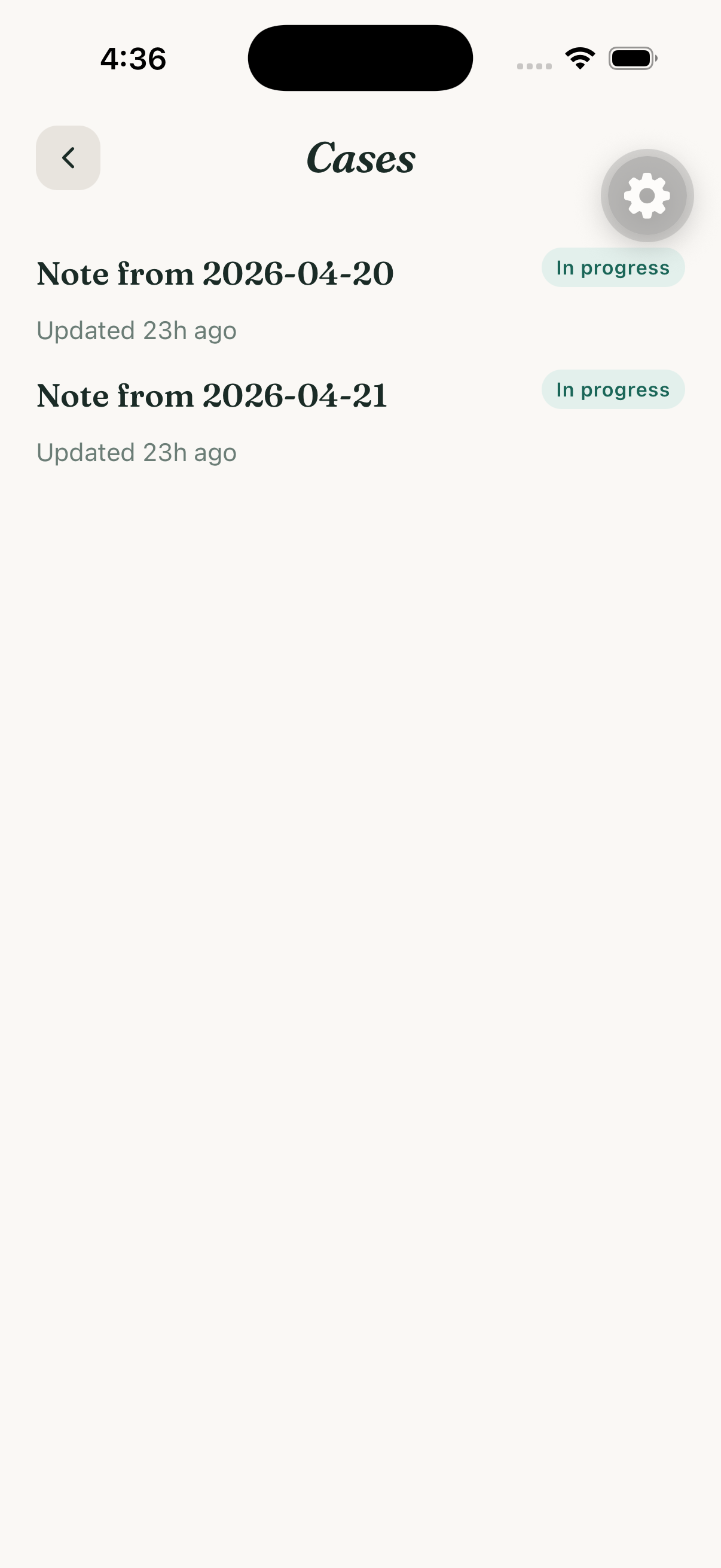
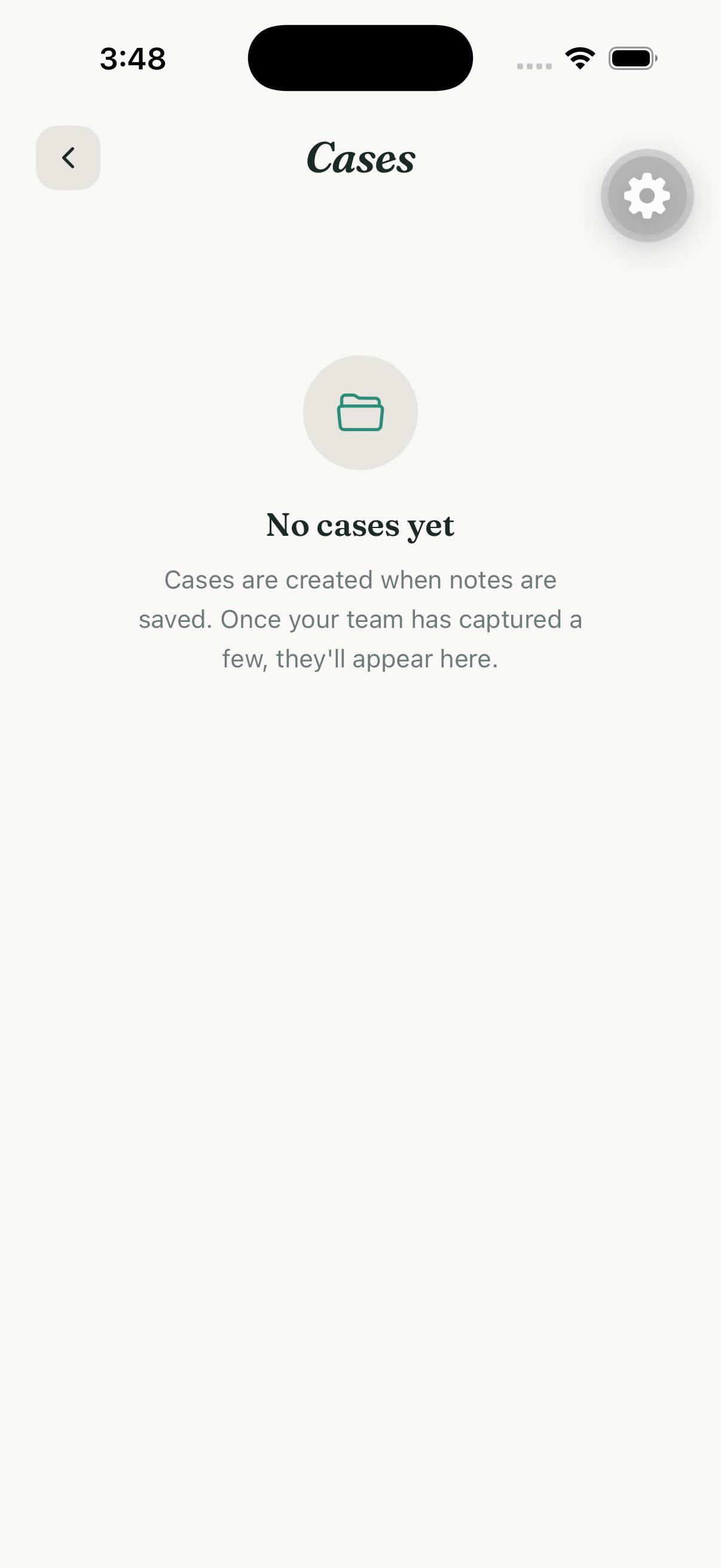
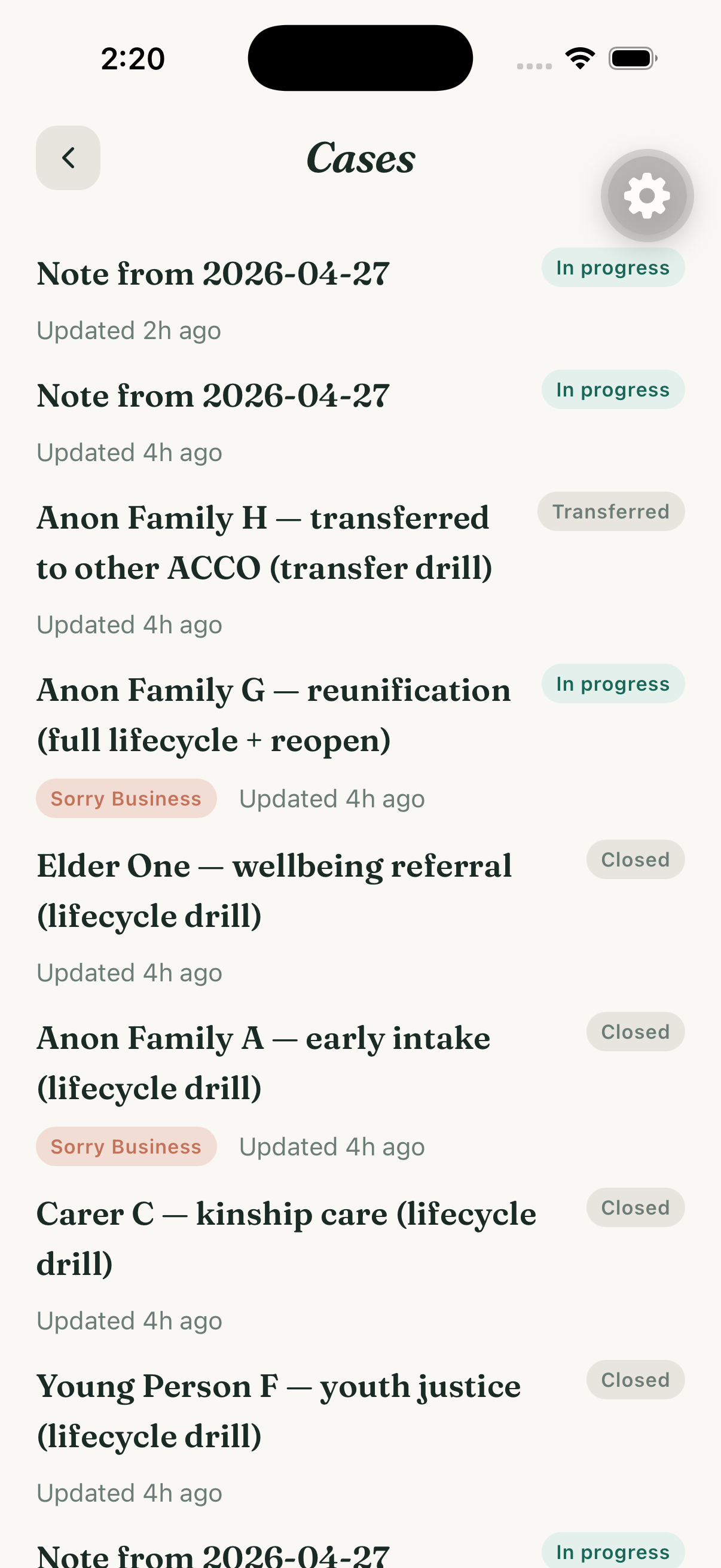
From the first referral to the closure ceremony — and reopening when the family reaches back out. Five named states, transitions that audit themselves, role rules that match how supervision actually works.
Referral landed. Worker assigned.
Strengths, concerns, kinship circle.
Goals agreed with the family.
The work happens. Notes accumulate.
Wins named. Future-self letter.
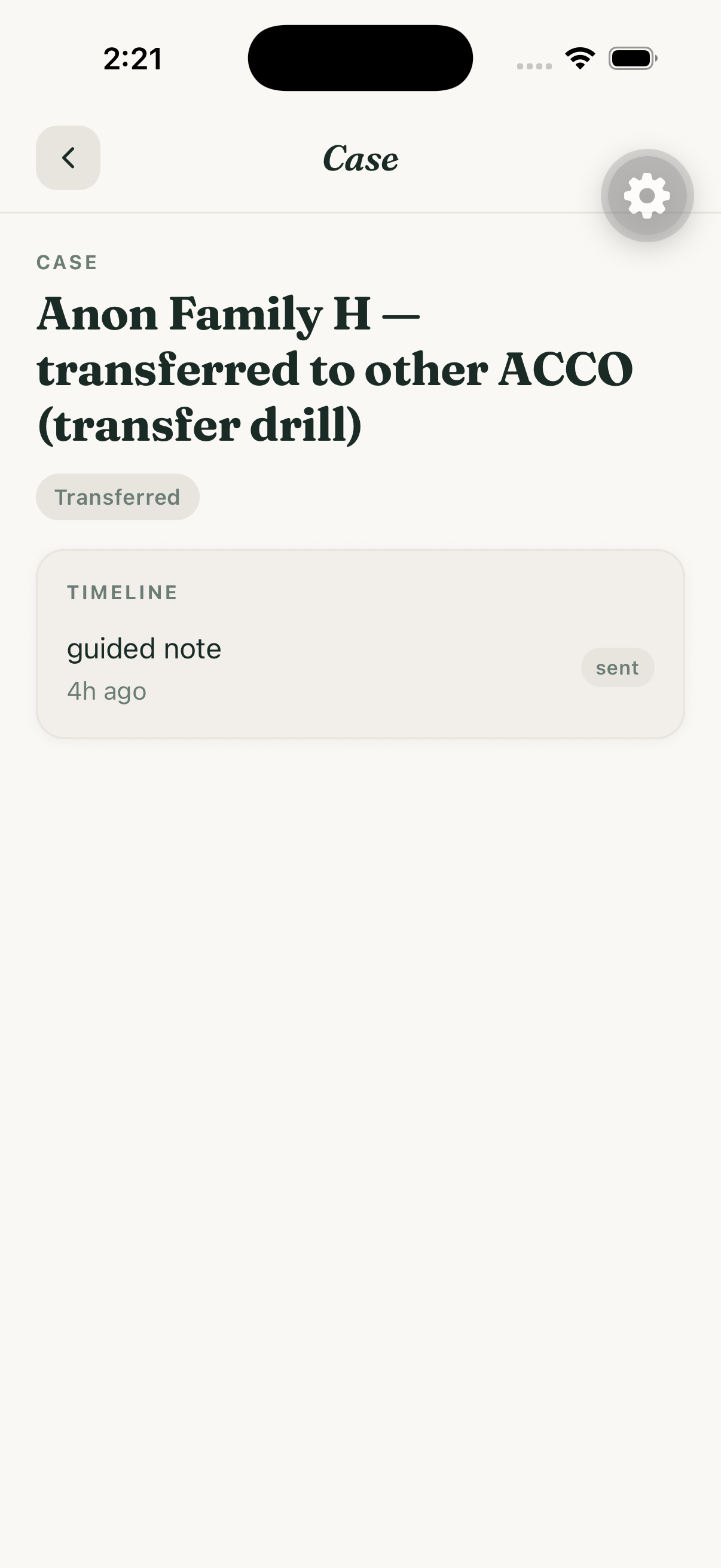
Every state change goes through one auditable RPC. No direct writes. Reopens, transfers, and supervisor approvals are first-class transitions, not workarounds.
The hidden iceberg
The note app you launch on day one is the same product as the case-management system you flip on later. Same database. Same RLS. Same audit chain. Different surface.
Backbone shipped
Compliance evidence
Audit chain
Every state change is hashed with the previous one. A single altered byte breaks the chain — and we can prove the timeline.
Supabase ap-southeast-2. Vertex AI australia-southeast1. Azure Australia East. No cross-border replication.
Wellbeing notes are owner-only. Column-level GRANT denies SELECT to supervisors. Loss of passphrase = unrecoverable note. By design.
Per-org chain with chain_sequence ordering. No app-layer INSERT — only SECURITY DEFINER RPCs can write events. verify_audit_chain() available to auditors.
Privacy Act compliant. APP 11 + APP 12 mapped. Annual third-party security review. Production gate doc available on request.
Cultural safety as default
Kinship attendees are first-class data — not free-text. Sorry Business is a cohort marker the workflow respects. The audit chain captures cultural-safety decisions alongside clinical ones.
Every copy decision goes through review with the ACCHO partner org. Cultural decisions stay with Aboriginal staff — never enforced by a Postgres trigger.
Launch narrow → expand on demand
Five measurable signals tell us when an organisation is ready for the case-management surface. Until then the launch app is enough and the backbone stays quietly underneath.
Cross-note search
≥ 20% of orgs search across notes for a single client → cases UI flips on.
Team visibility ask
≥ 3 supervisors per org request "see all my workers' notes" → case-team UI flips on.
Bulk export same family
≥ 5 exports of multiple notes for the same family → document generation flips on.
Wellbeing concern
≥ 1 supervisor flag from any worker → wellbeing check-in flips on.
Closure ritual
≥ 3 closures with reflective letters → closure ceremony flips on.
Ready to talk?
Your team launches on the focused note app today. The case-management surface flips on per-org as the signals fire — no migration, no rebuild, no re-training. Ready when you are.
For ACCHO procurement teams: a 12-page technical brief with security audit, lifecycle architecture, and roll-out plan.